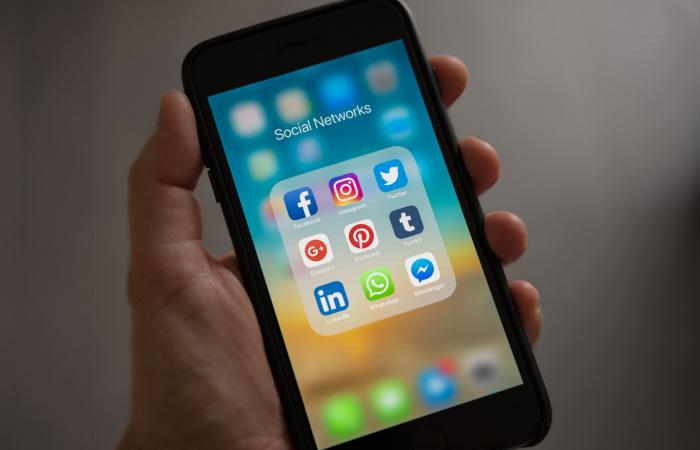
Social media is defined as websites and online applications that allow users to connect with each other, creating and sharing content to create communities with similar interests. So, if you’re wondering which to use, that will be the most effective for your business, we’ve put together a brief discussion of the main ones to help you.
Facebook is still one of the largest social media platforms in the world, with users potentially having exposure to 2.38 billion active users worldwide. In the UK this amounts to 40 million people, or 71% of those over the age of 13, and is set to rise to 41.37 million by 2021.
It’s possible on Facebook to reach a highly-targeted audience, increase engagement and relevant traffic to your website, which will, in turn, increase your SEO, at a relatively low marketing cost. You can use Facebook insights to target offers to different sections of your audience and build brand loyalty. And, you can create ‘groups’, potentially building ‘sales funnels’, enticing prospects with free help, to then compel them to buy from you, thereby converting them into actual customers.
Industries that are noted to do particularly well on Facebook are financial services, telecoms, technology and automotive, as well as retail, gaming, entertainment and media.
Overall, Facebook usage is predicted to rise, but use by teenagers has and is seeing an increasing drop off, so this is an important consideration, depending on who your target market is.
Primarily a visual platform for sharing photos and videos, there were 23.8 million UK users of Instagram in 2019, with the majority between the ages of 18 to 34. It’s considered to be friendly and fun, with business accounts sharing snaps of their team, their products and related adventures to build visual brand awareness amongst their target audiences.
New audiences can be reached through use of hashtags, and a community of like-minded people and customers can be created, with the ability to quickly ‘like’ and comment on your photos and videos, providing you with valuable feedback.
It has been stated that Instagram generates?120 times more engagement?per follower than Twitter. But opinions are wide and varied on this. Some drawbacks with Instagram are that you cannot have clickable URLs on your posts, and you lose copyright of your images once posted. Also, be aware that this is a VISUAL, punchy platform, so if you cannot translate your business offer into great images, it may not be worth your while. Stock images are not generally well-received.
Industries said to do well on Instagram are fashion, health and wellness, arts and crafts, food and drink, and beauty and photography, as well as travel and hospitality, event planning and automotive.
Twitter is the fast-moving platform for immediate trends, news and political rants. Because people can contact you directly, and publicly, it’s great if you want your customer service upfront, as well as product updates and sector news. Certainly, if your business has a crucial element of customer service, Twitter is a great platform to be on.
The sectors that are said to get the most engagement and traffic to their websites from Twitter are news, finance, retail, fashion and sport, as well as health and wellness, travel and hospitality, telecoms and e-commerce.
Gender-wise, Twitter has about an equal usage of men and women, with majority usage of 18 to 29-year olds. In 2019 there were 330 million active users, with 40% using the platform daily. Although usage is said to be in slow decline, there are those that consider it the platform of choice for establishing thought leadership in their sector as most publishers, journalist, national and local are active Tweeters.
After Facebook, Pinterest is said to be the largest driver of traffic to business websites. It is a social network where people look for inspiration and ideas in their interests and hobbies. Pinterest users post their ideas as ‘Pins’, which are then searchable by Pinterest users, and potentially ‘saved’. Pinterest?has been described as ‘a web-based pinboard or bulletin board — but with greater organisational functionality’.
Pinterest is used markedly more by females than males, with 45% of online females using Pinterest in the UK, compared with 27% of online men (2018 figures). Of the females using Pinterest, over 64% of them are under 34 years of age. So, if your target audience is male and over 34 years of age, this is not the platform for you.
If you’re in retail, Pinterest is said to be the growing platform for your business. This is a platform for direct, visual marketing that substantially drives traffic through the prolific sharing of Pins. Although, statistically, not as effective as Facebook, Pinterest is growing for businesses, as users are actively looking to discover and connect with new brands.
There are 500 million worldwide LinkedIn users, 21 million of which are in the UK. LinkedIn is said to be the social media platform for professionals, with companies, thought leaders and experts posting authoritative white papers and articles, as well as job openings and discussion pieces for their relevant communities. Users publish their ‘profile’, which includes their special areas of expertise, their credentials, job titles and experience, with the aim of attracting recommendations for their work, more lucrative business and job offers.
LinkedIn is known to be best for business-to-business (B2B) organisations to reach professionals and business decision-makers. The audience is ‘business-minded’, so they are actively looking for networking opportunities and way to make their professional lives easier. Businesses typically want to connect with decision makers in their relevant industries, and are able to target them with paid ads.
If you’d like further help in deciding which social media platforms to use and how, please get in touch and one of our Cultrix web experts will talk you through the many options available to you and how we could potentially manage your presence.
< Read more articles on our Web Academy
The changing role of social media in marketing
Social media isn’t what it used to be. User-behaviour has evolved, and businesses are under increasing pressure to adopt different posting habits to make it worth their while.
Providing digital help and support – what to consider
Do you want to offer your customers digital help and support they can access online? It’s not as simple as just removing the phoneline. Here’s what to consider.