Internet access is now an essential resource for almost any business. Even if it may not seem like your company could benefit there are some very good reasons to get online. And for those business who are already connected, a dedicated business broadband service can be a worthy upgrade to your office.
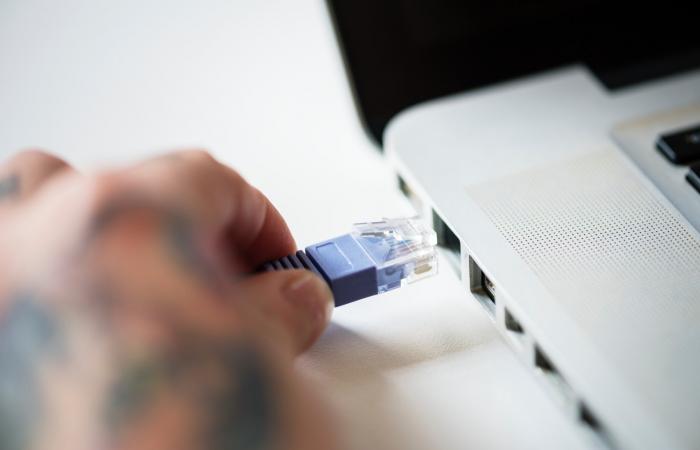
Here’s just a few reasons why you should consider business broadband.
Faster connection speeds
Business broadband generally offers much better contention ratios than consumer products. What this means is you aren't sharing your line with lots of other users so you won’t see a big drop in speeds during busy periods. You can check out the Broadband Genie guide to upload and download speeds if you need more information on this.
Businesses can also sign up for services not available to home users, such as SDSL. This stands for ‘symmetric digital subscriber line’ and provides the same speed up and down. While the download speed will be lower than ADSL or fibre optic it is perfect for VOIP and other specialist needs.
However, SDSL is an older technology, and while it is useful in some situations the new generation of ultra-fast fibre optic broadband offers better performance all round with significantly faster upload and download speeds. Where an ADSL connection may have struggled to provide good service to everyone in your office, a fibre line offers enough bandwidth for a larger number of employees.
Better for uploading
ISPs know that businesses have different needs to home users and so they offer faster upload speeds, which is essential for large file transfers.
Fibre optic broadband can provide very quick uploads (perhaps 20Mb or more), however this will depend on having fibre optic available in the area. If you cannot get fibre you may instead be able to sign up for ‘Annex M’. This is a new feature available on ADSL2+ exchanges where you trade some download speed for an increase in upstream rate.
Support home working
Home working is becoming increasingly popular, and many companies support it by offering a secure VPN. This allows remote employees to carry on working as though they were still in the office while also maintaining your security. However a VPN needs a reasonable upload and download speed to work properly so if you’re going to offer this a new or upgraded connection could be required.
Share the connection with all employees
If you find your existing connection slowing to a crawl it may be due to the number of users. Every time you add a new staff member you increase the pressure on your line, slowing it for everyone. Upgrading to a faster business broadband service will give you plenty of bandwidth to share amongst your employees and have enough left over for busy periods.
Static IP address
Most home connections use dynamic IP addresses, where the IP address can change if the router is disconnected. But businesses who may be operating servers or secure VPN links will need a static IP that never changes. These are rare on home connections but should always be available on a business service.
Dedicated customer support
Most ISPs deal with customer and technical support queries from businesses separately, with a dedicated team of advisors who will prioritise faults with mission-critical services such as VPNs or voice communications. That means you shouldn’t spend ages stuck in a queue waiting to speak to someone, and you may even have a dedicated person or team who will be able to offer a more specialised, tailored level of support.
Guest author bio: Matt Powell is the editor for the consumer broadband comparison site Broadband Genie.
< Read more articles on our IT Academy
Business services like IT support, when they work properly, are a true partner to business. Here’s what it’s like when your IT support is a true partner.
If it can happen to McAfee, UNICEF and eBay…
It’s a wake-up call for brands – the SubdoMailing attack sees 8000 household names’ domains hijacked and exploited. Here’s why and how to protect your brand.